About Will Steger
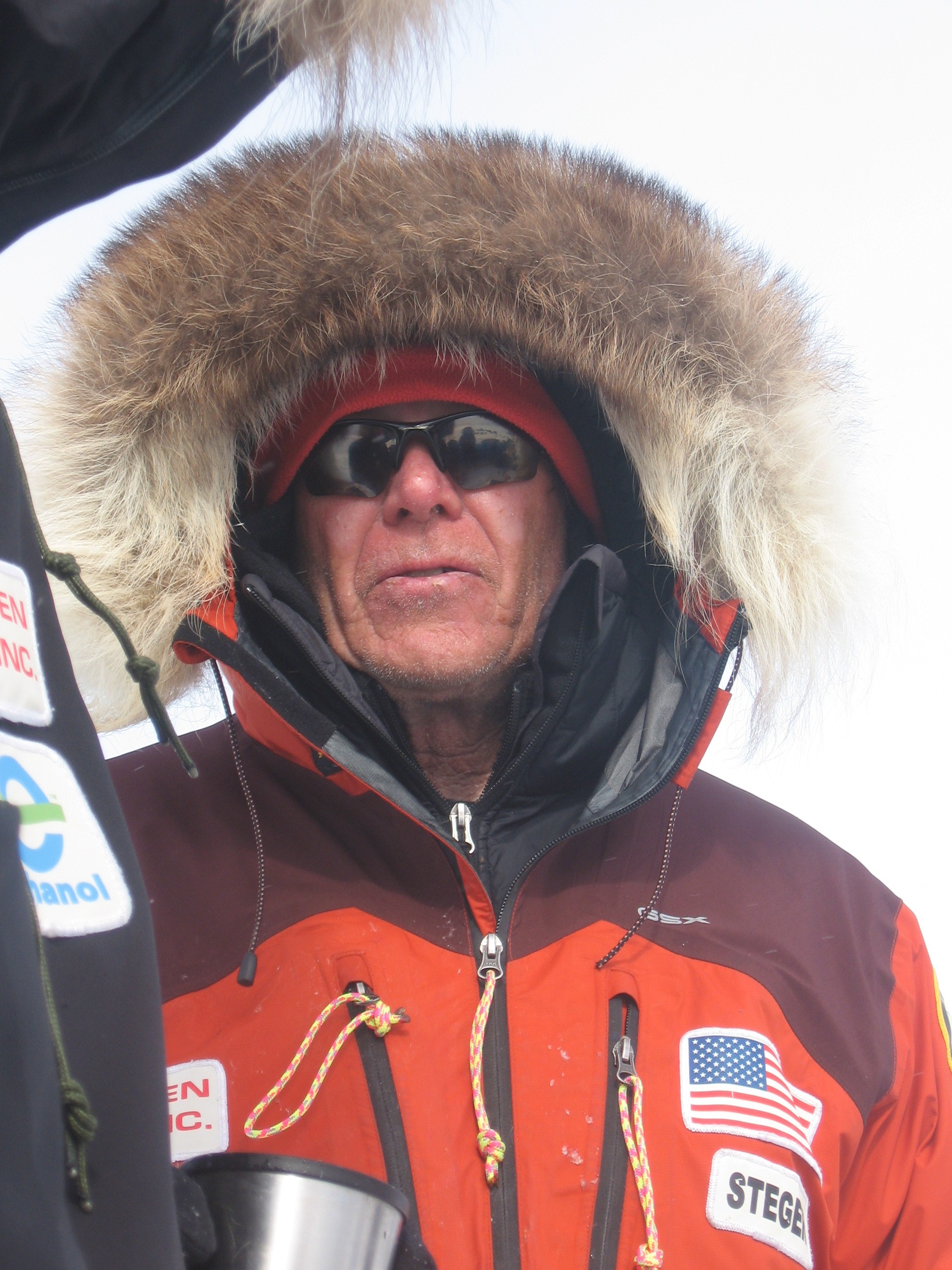
A formidable voice calling for understanding and the preservation of the Arctic, and the Earth, Will Steger is best known for his legendary polar explorations. He has traveled tens of thousands of miles by kayak and dogsled over 50 years, leading teams on some of the most significant polar expeditions in history.
Expeditions
Steger led the first confirmed dogsled journey to the North Pole without re-supply in 1986, the 1,600-mile south-north traverse of Greenland (the longest unsupported dogsled expedition in history) in 1988, and led the first dogsled traverse of Antarctica (the historic seven month, 3,741-mile International Trans-Antarctica Expedition) in 1989–90.
Educator & Entrepreneur
Will Steger is also an educator, author, entrepreneur and eyewitness to the effects of climate change.
With his ability to blend extreme exploration and cutting-edge technology, Steger pioneered online education – reaching more than 20 million students via online daily journals and even delivering the first ever transmission of digital photography from the North Pole.
Based on his unique eyewitness experience with climate change in the Polar Regions, he established Climate Generation: A Will Steger Legacy in 2006 (formerly Will Steger Foundation), a Minneapolis, MN based nonprofit that educates and empowers people to engage in solutions to climate change.
Drawing on his knowledge as an expedition leader, Will Steger designed the Steger Wilderness Center in Ely, MN, dedicated to solving the problems of our age at a place that inspires clarity and break-through innovation. It is built to be a living example of ecological stewardship, a demonstration center for devising new solutions to the seemingly intractable issues we collectively face.
Recognition and Awards
- 1995: Steger joined Amelia Earhart, Robert Peary and Roald Amundsen in receiving the National Geographic Society’s prestigious John Oliver La Gorce Medal for “Accomplishments in Geographic Exploration, in the Sciences, and Public Service to Advance International Understanding.” This was the first time the Society presented these three categories together and this award has not been given since.
- 1996: Steger became the National Geographic Society’s first Explorer-in-Residence
- 1997: Received the Explorers Club’s Finn Ronne Memorial Award
- 2006: Steger joined Jacques-Yves Cousteau, Dr. Thor Heyerdahl and Neil Armstrong in receiving the Lindbergh Award. Steger was given this award for “numerous polar expeditions, deep understanding of the environment and efforts to raise awareness of current environmental threats, especially climate change.”
- 2007: National Geographic Adventure presented him with their Lifetime Achievement Award for his work on climate change.
- 2009: Steger received a Conservation Leadership Award from the Conservation Minnesota Voter Center.
- 2014: Received Minnesota Senate Resolution honoring his incredible leadership and accomplishments for raising awareness of the urgency of climate change and the opportunity for solutions.
- 2015: Steger received the Canadian Governor General medallion in recognition of his expeditions in the Canadian Arctic (2004, 2007, 2008) and educational efforts to raise awareness of the Canada-Minnesota relationship.
Speaking
Each year, Steger gives more than 100 invited presentations. His recent audiences have included Goldman Sachs, the U.S. Environmental Protection Agency, SUPERVALU, Target Corporation, United Health Group, Toro, Great River Energy, and Xcel Energy. Steger has been invited to testify before the United States Congress, as well as advising world leaders on the environmental protection of Antarctica.
Education
Steger holds a Bachelor of Science in geology and Master of Arts in education from the University of St. Thomas, St. Paul, Minnesota, in addition to five Honorary Doctorates.
Author
Steger is the author of four books: Over the Top of the World, Crossing Antarctica, North to the Pole and Saving the Earth.
Media Kit
Will Steger Curriculum Vitae (PDF)
Will Steger Bio (PDF)
Headshot
For media inquiries and speaking requests, please contact:
info@willsteger.com
Climate Generation: A Will Steger Legacy
Nicole Rom, Executive Director, nicole@climategen.org